

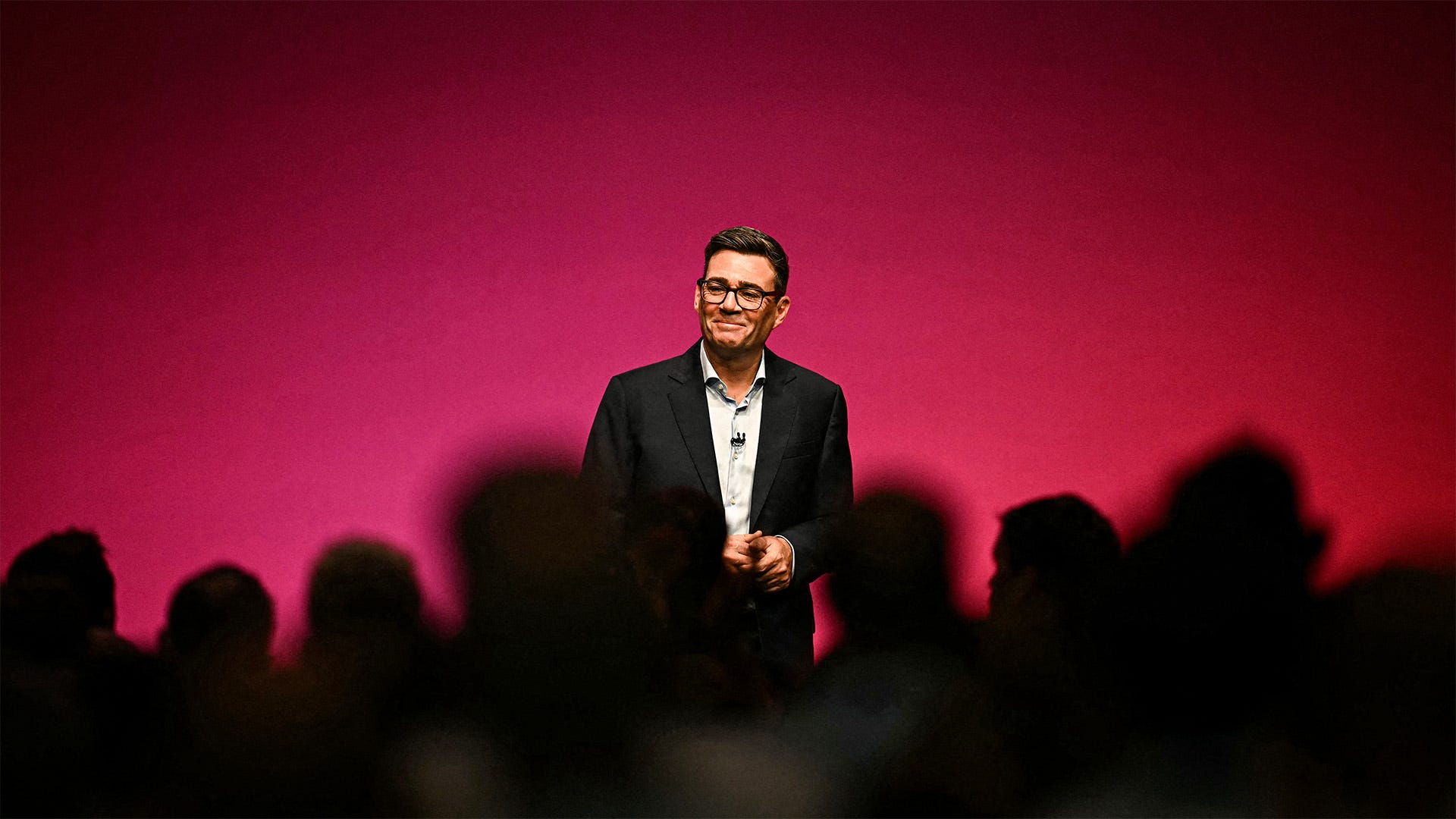
This is day 3 at the conference and the mood ahead of Andy Burnham’s keynote was positive (though not feverish). This meant the speech took place in a more relaxed, confident atmosphere than at the 2025 edition.
I’ll say this up top. This was the best leadership speech I’ve seen delivered at the Labour Party conference for a long time. It had clarity, energy and emotion and, importantly, it didn’t shy away from making an argument to the country. There is so much to cover, but I want to focus on:
The opening
Staging
Speaking personality transitions
Prebuttal
Humilty
I’ll also take a look at where the speech needed work.
The opening
The opening was powerful. It was a personal story about his upbringing that neatly linked the conference city to his family’s story. It was slow, and he let the story breathe. He didn’t rush it.
I suspect he used the story not only to capture attention or win the audience over, but also to steady himself. He’s an accomplished politician, but you can bet he was nervous delivering that speech.
There is real power in using personal stories, ones you know well and don’t have to learn by rote, to steady yourself and give yourself a strong start that carries you through the rest of the speech. I think there’s always a little nervous energy in the audience at these conference speeches. Those first 3-4 minutes are critical for helping the audience relax too so that they can focus on the message.
In many ways, his approach resembles the way Michelle Obama opens her big keynote speeches. I use video clips of her openings when coaching a lot because she’s a great example of how to nail the start of a speech. Andy clearly copied her playbook.
Staging
I liked the staging - a lot. As I’ve written previously on The Debate Desk, I’m a fan of minimal lectern use. Speakers open up a greater array of persuasion opportunities by using space and body to create constant energy flow between themselves and the audience. It made the whole experience feel natural.
This was helped by his decision not to wear a tie, which fits his brand and created the relaxed, raw speech he wanted to give. His team could have gone further, maybe. A rally set-up, with people behind the speaker so that he feels in the middle of it, could have elevated the speech even more. Still, the staging was excellent, and it should set a marker for how speakers engage with a room, a space and a platform in future.
Speaking personality transitions
One of the most impressive things about Andy Burnham’s speech was how it moved between different speaking zones. At times, it was very conversational, where he broke the fourth wall, made jokes, and came across as if you were chatting to him on the street. Much of the speech, however, took place in the Firebrand zone, where he let his anger shine through. His face was stern, his gestures pointed and this matched the content he was delivering.
He delivered the section on social care reform almost entirely in that Firebrand style. This is a deeply personal matter for him, having just lost his Father, and he permitted himself to let go. At times he was visibly emotional, and we, as an audience, felt it. It was one of the most powerful moments I can recall in recent politics.
He switched again to present as a Statesman for the section on bringing water under public control, where he was deliberately slower. He projected solidity and protection as someone who will be in control and will hand control back to others. The link between message and speaking delivery created memorable lines, which is why that section worked so well.
My one critique of his use of speaking zones is that he could have spent more time as a Conversationalist. Eventually, the raw passion and anger started to lose their power. It needed more passages delivered in a more relaxed way to give the audience relief from the intensity that dominated most of the speech.

Prebuttal
There is a concept in debating called prebuttal. When you know your argument could be distorted, misrepresented or heavily attacked by an opponent, you anticipate their point, name it explicitly and rebut it in advance.
It’s especially useful when you won’t get the chance to respond afterwards. In this case, the Conservative Party conference takes place later and Reform will likely release a statement or video attacking the speech. Prebuttal is particularly valuable when you are making counterintuitive or controversial points.
It was interesting that the Prime Minister used prebuttal in the section of his speech on water to strengthen his case for public control, arguing that businesses need effective, well-run water and utilities to thrive. He explicitly acknowledged that some would call the policy bad for business, then cleverly flipped that argument to present it as a pro-business move. This is a good example of why prebuttal works. He needed to substantiate the argument more and spend more time on it, especially since he had relatively little to say about how business growth creates prosperity later on.
Prebuttal would also have helped in the passage calling for a national conversation on funding social care through reform of the triple lock. This was always going to be one of the more controversial parts of the speech, with plenty of political grenades thrown at it afterwards. I would have fleshed out the case against his proposal and answered it within the body of the speech.
Humility
One of the most powerful moments in this conference speech came when Burnham referred to the collective failure to tackle some of Britain’s biggest problems, including how we care for older people. Rather than using this to attack a particular party, he offered a mea culpa on behalf of his generation of politicians, explicitly including himself and pointing to himself as he said it.
This was powerful. It conveyed humility and it felt different. Rather than treating the electorate as unsophisticated, it showed it’s possible to treat the public as grown-ups. Politicians can be candid and blunt about where they have fallen short, and that candour goes a long way in building credibility. The line was delivered really well.
What could have been better?
The backdrop to this speech is a country where the discourse around immigration, citizenship, multiculturalism and community relations has taken a dark turn. Leading public figures in politics, media and business have sought to racialise large parts of the social agenda and recent events. Harry Novak, Jason Arday and the current debate about whether Black and Brown people can be English illustrate just how poor the conversation about race and community relations in the UK has become. Unfortunately, the speech was very light on this. I would argue it’s one of the most pressing arguments the Prime Minister needed to prosecute, and neglecting it represented weak strategy.
The speech also needed an overarching idea. There was a clear diagnosis that the country is on the wrong track, and a range of policy areas Burnham wants to tackle (acknowledging that previous leaders were too afraid to). Yet it lacked a developed overarching central argument explaining why his proposed moves are the right ones, or how they connect to a theory of what a good society looks like. The closest we got was an idea centred on the importance of control but it didn’t make an appearance early in the speech and when we did hear it, it wasn’t fully formed (What makes control such an important principle to govern a country by and why does it produce better and fairer outcomes?
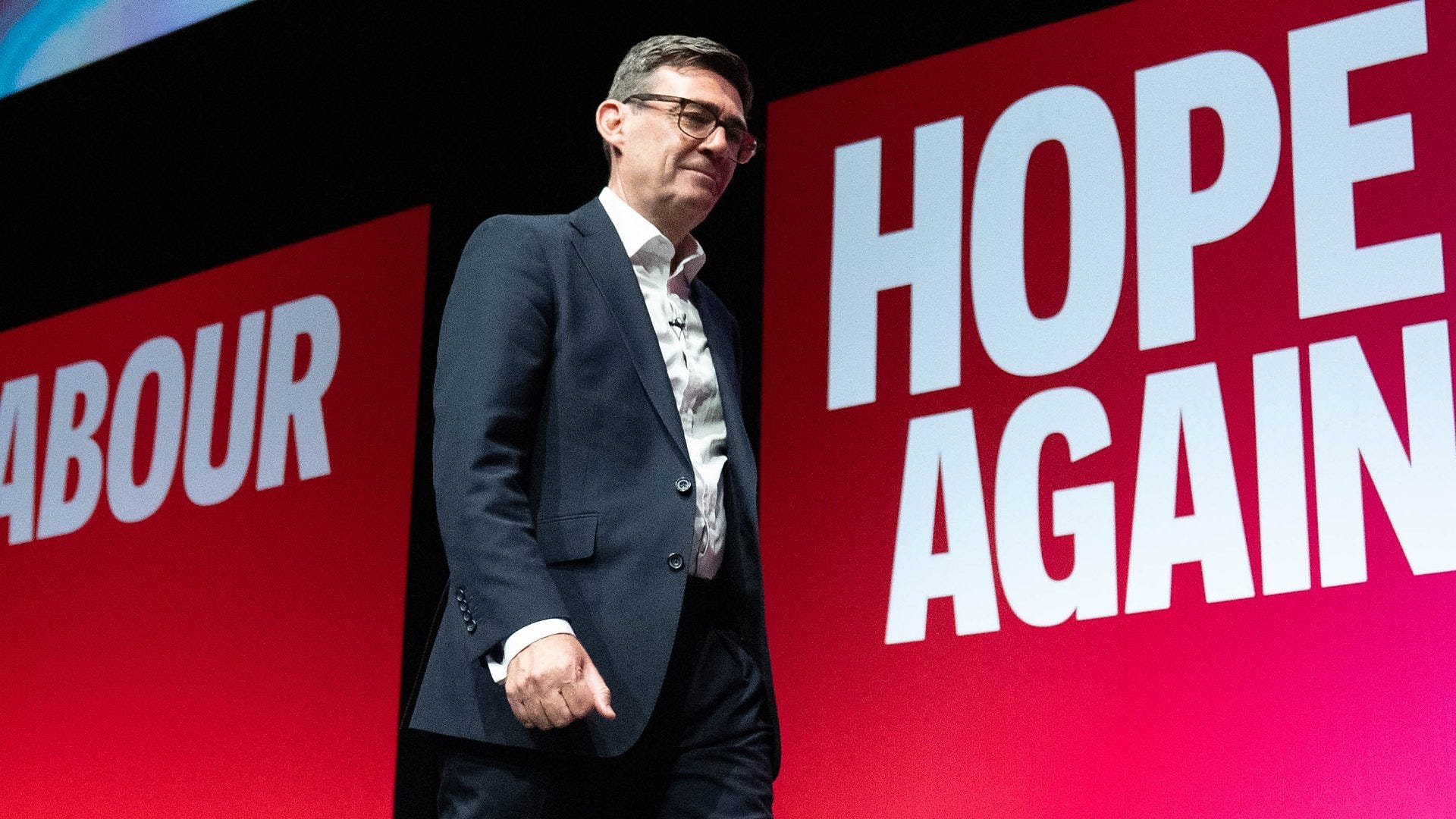
“Hope Again” is a fabulous tagline, but it is not an overarching argument that ties the speech together. As with Ed Davey’s speech last week, this was the missing element that would have made it tighter, more memorable and harder to attack.
Burnham wanted to give a raw, unusual and authentic performance that conveyed to a jaded country he was up for a fight. He delivered.
The Debate Desk analyses political speeches and debates to help you improve your speaking and debating. Free analysis every week. Paid subscribers get more analysis of more speeches and debates.